Biomedical Research and Engineering:
At Katsua Kurabayashi’s biomedical lab at NYU Tandon, I have been working on designing, improving, and manufacturing Digital ELISA protein detection cartridges.
Digital ELISA is an ultrasensitive assay for detecting very low concentrations of proteins or biomarkers. It works by isolating individual target molecules into tiny compartments, generating a digital “yes/no” signal for each one. The cartridge is a key part of this process—it’s a disposable device that contains the microfluidic channels, wells, and beads where the sample is loaded and the reactions occur, allowing compartmentalization, signal generation, and detection all in one platform.
As a member of the team, I work on manufacturing new cartridges for testing, developing testing systems, and designing new cartridges in SolidWorks. Attached below is a description of the basic chemistry happening in the ELISA and an example of what the existing technology looks like.


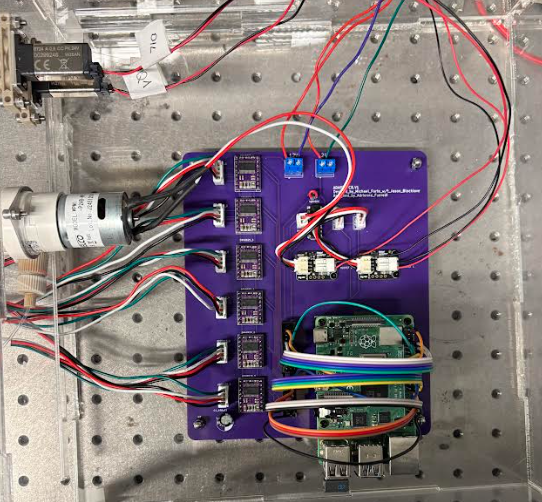
I recently upgraded the control system for our Automated Digital ELISA platform (ADAPT) by designing and integrating a custom PCB. This significantly improved wiring organization and created a clean, repeatable architecture for mounting key components such as motor drivers, H-bridges, and MOSFETs.
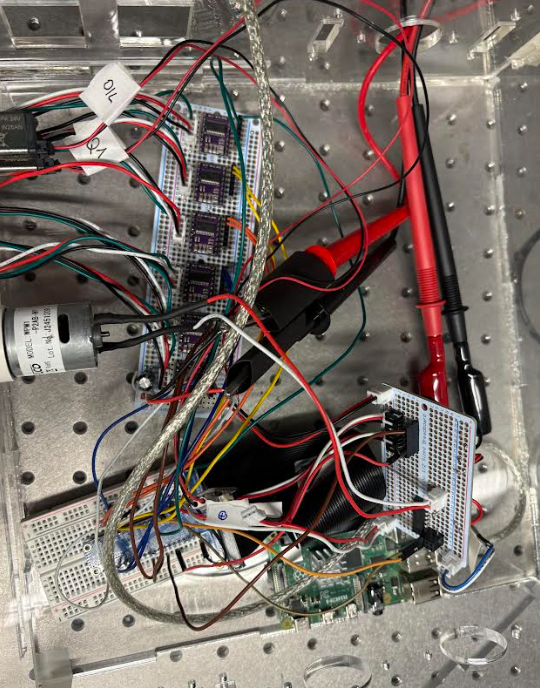
Beyond improving system reliability and scalability, this redesign was essential in transitioning the prototype out of the lab and into more flexible environments. This mobility is especially important as we collaborate with partners at the University of Michigan and demonstrate the system in a variety of settings. Attached below is the updated PCB with the old controls below for reference.
My Postdoctorate’s work and my own data is property of the NYU Physics department and I cannot share the results. Regardless, my efforts were succesful and meaningful towards the project.